For much of the past century, the industrial model of education has supported its goals; that being, to equip young individuals with the knowledge and skills necessary for workforce success. However, with the rapid advancement of technology, especially artificial intelligence, the foundations of this ‘knowledge economy’ are nowhere near as strong as they once were.
Nicole Dyson from Future Anything introduces us to LinkedIn’s Chief Economic Opportunity Officer, Aneesh Raman, who confirms the world is now transitioning into the era of the innovation economy. In this new world, human capabilities such as curiosity, creativity, communication, critical thinking, leadership and agility are becoming more crucial than simply recalling information or automating tasks.
The pressing issue now is not whether young people require these capabilities, but to what extent. The implication for schools is to ask how can we effectively ensure the teaching and assessment of such capabilities; after all, we measure what we value!
Recently, Nicole launched Future Anything’s new Capability Framework. As the world shifts to an innovation economy, Nicole and many others would argue that young people need to develop the capabilities such as the ability to think critically, collaborate, and ethically engage with artificial intelligence.
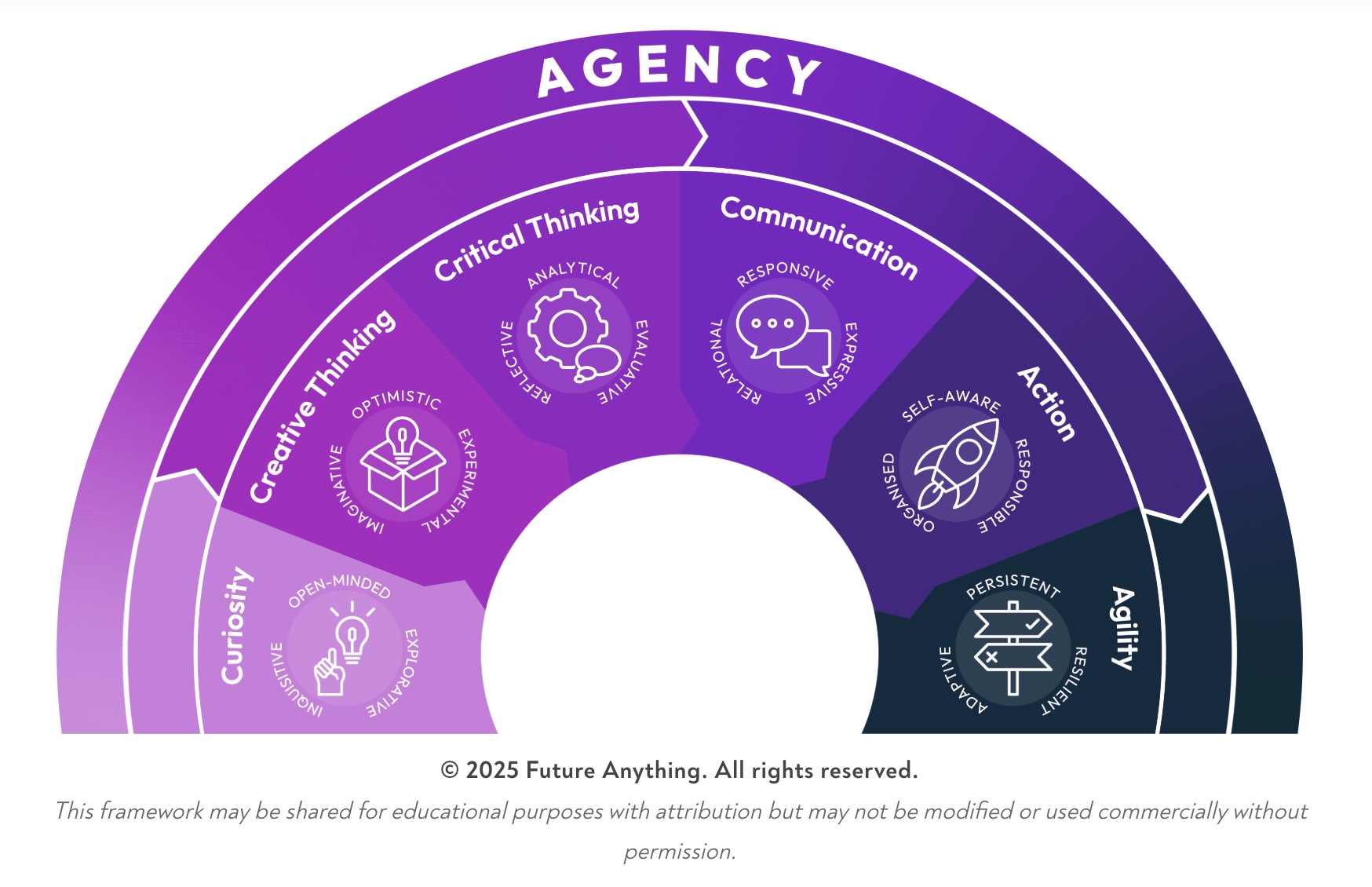
The focus of developing capabilities for school-aged students is not new. The General Capabilities within the Australian Curriculum brought this to the attention of educators some 15 years ago.
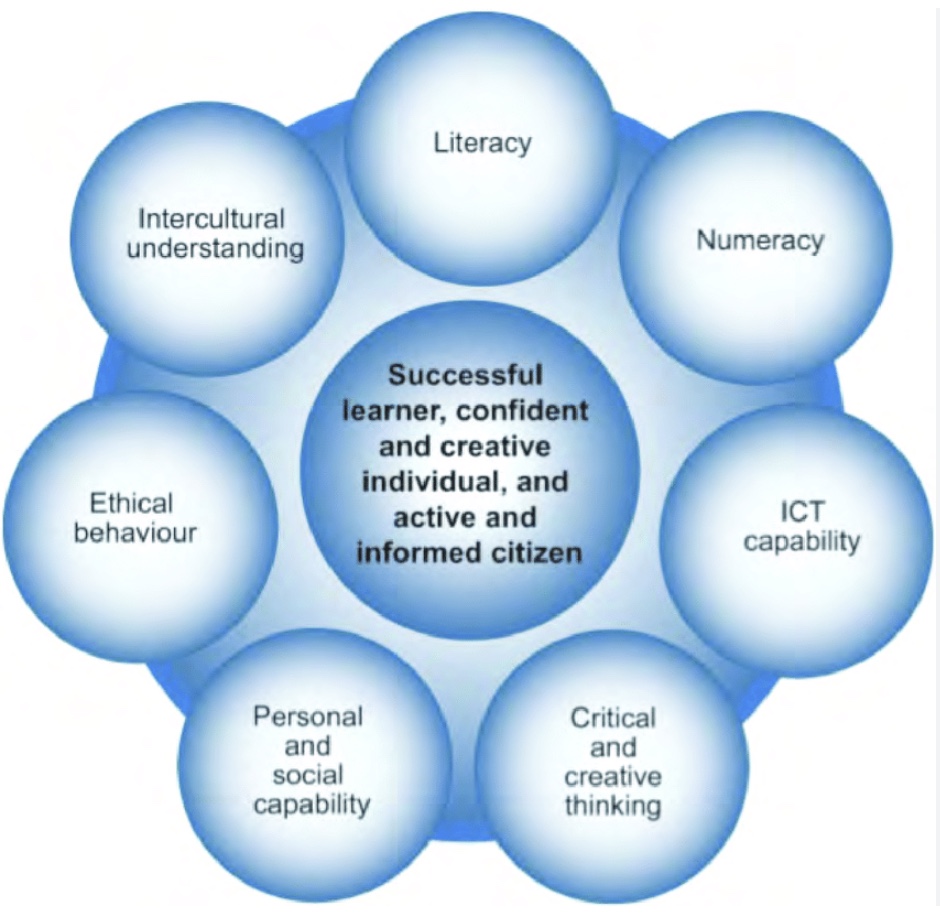
ACARA’s General Capabilities Framework
Most notably, for the last 10 years, Professor Sandra Milligan has led a team from the University of Melbourne’s New Metrics Program. The team has partnered with 40 innovative schools to develop and measure the growth of seven ‘complex competencies’ required for further learning and a new world world of work. They appear below.
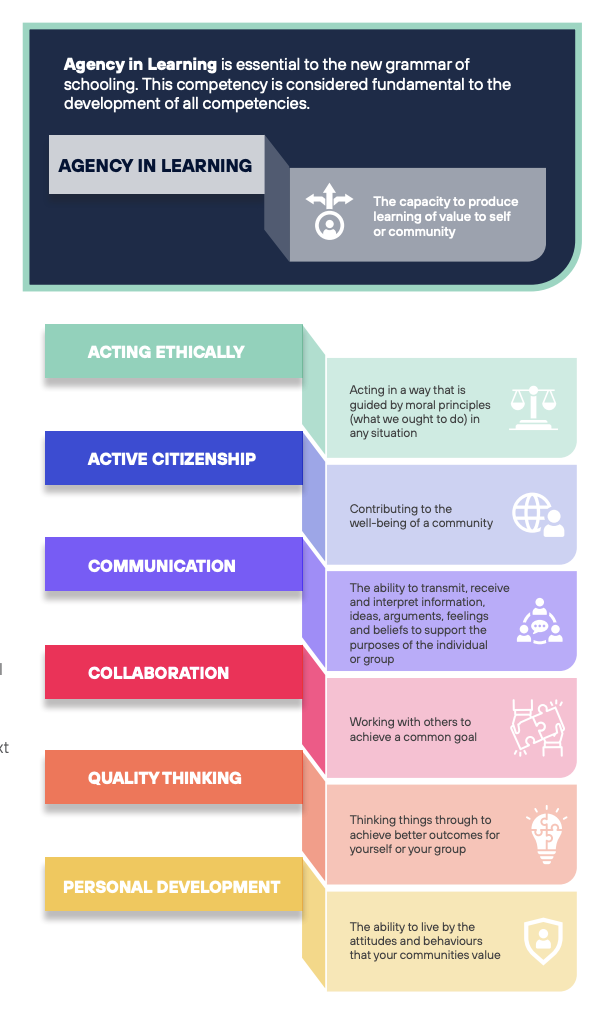
For more insights about the work of the University of Melbourne’s New Metrics research project, click here (3 minute video).
As the world of work continues to shift and the requirements of industries shift with it, education, secondary schools in particular, are challenged to adopt a far more explicit focus on capabilities. Employers globally are identifying these essential skills and capabilities as critical for long-term contentment and fulfilment in working lives. Reports which support this include:
- The World Economic Forum’s “The Future of Jobs Report 2025” (January 2025) underscores the growing importance of soft skills in the workforce. Analytical thinking remains the top core skill for employers, with seven out of ten companies considering it essential. Resilience, flexibility, agility, leadership, and social influence are also highlighted as critical skills, reflecting the need for adaptability and collaboration in the modern economy.
- The OECD’s “Trends Shaping Education 2025” Report (February 2025) emphasises the necessity of equipping students with skills such as analytical thinking and leadership to navigate and thrive amidst these changes.
- UNESCO’s “Global Education Monitoring Report 2024/5: Leadership in Education” (October 2024) underscores the importance of leadership skills in fostering environments where soft skills are integral to the educational experience.
These reports collectively advocate for the integration of ‘soft skills’ into educational frameworks, highlighting their significance in equipping students for a rapidly changing world. However, the term ‘soft skills’ undervalues their importance and underestimates the work required to develop them; hence why 40 ‘lead schools’ across the nation follow the example of the University of Melbourne referring to them as, ‘complex competencies’.
Whether it is complex competencies or capabilities, many companies, businesses and government organisations have adopted frameworks to assist career development. The world of work has moved quicker than the world of education. For example, the NSW Public Sector Capability Framework was first developed in 2008, updated in 2013 and continues to evolve. It is designed to help attract, develop and retain a responsive and capable public sector workforce.
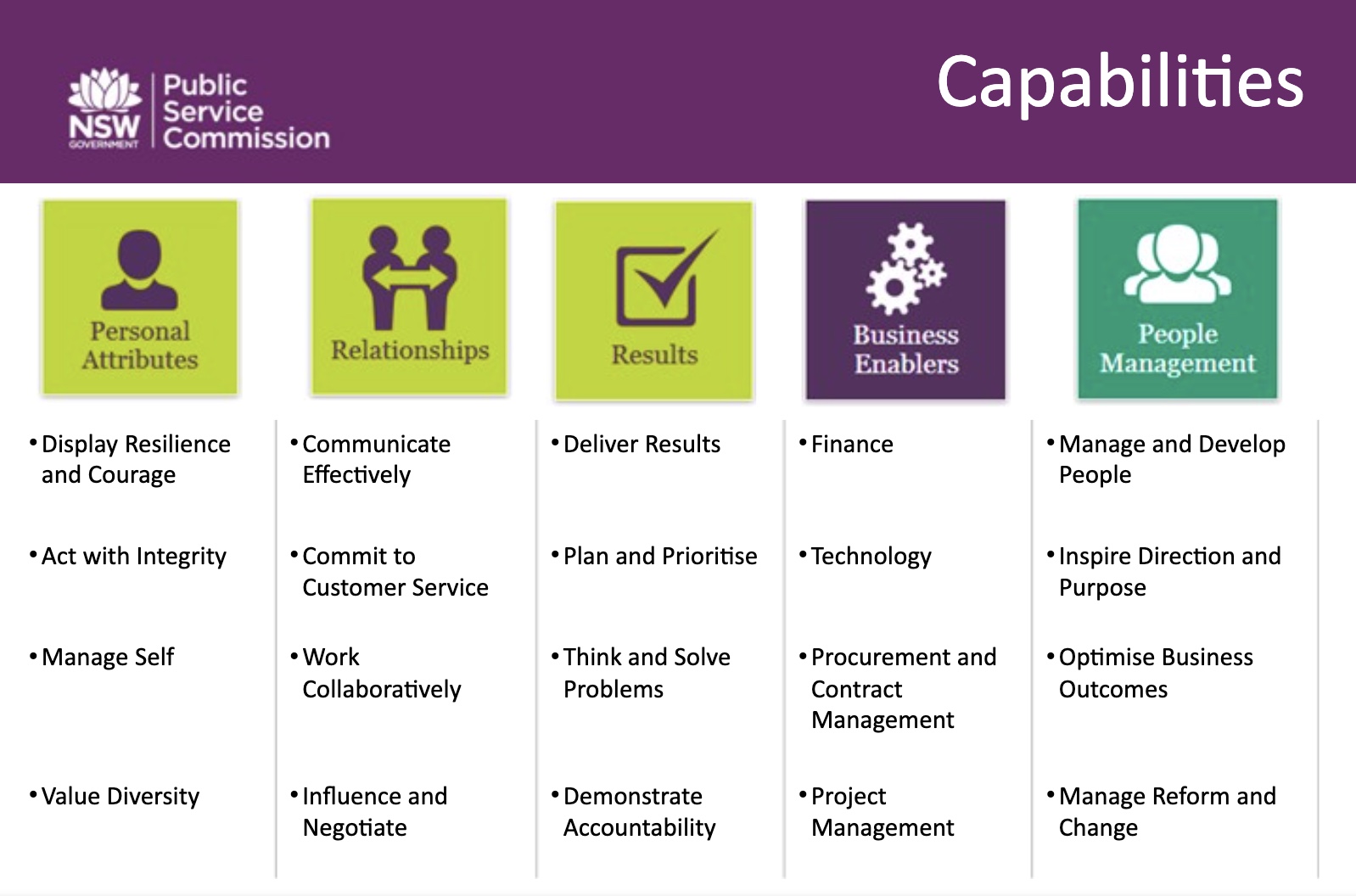
The Framework is designed to attract, develop, and retain a capable public sector workforce. It includes 20 core capabilities organised into five groups with key capabilities. The framework provides a common language to describe the capabilities and behaviours expected of employees, supporting consistent practices in job design, recruitment, performance development, and career planning.
Interestingly, the Australian Public Service (APS) use a capability model to help explain the different skills, knowledge and personal attributes that combine to make up someone’s overall capability as outlined below.
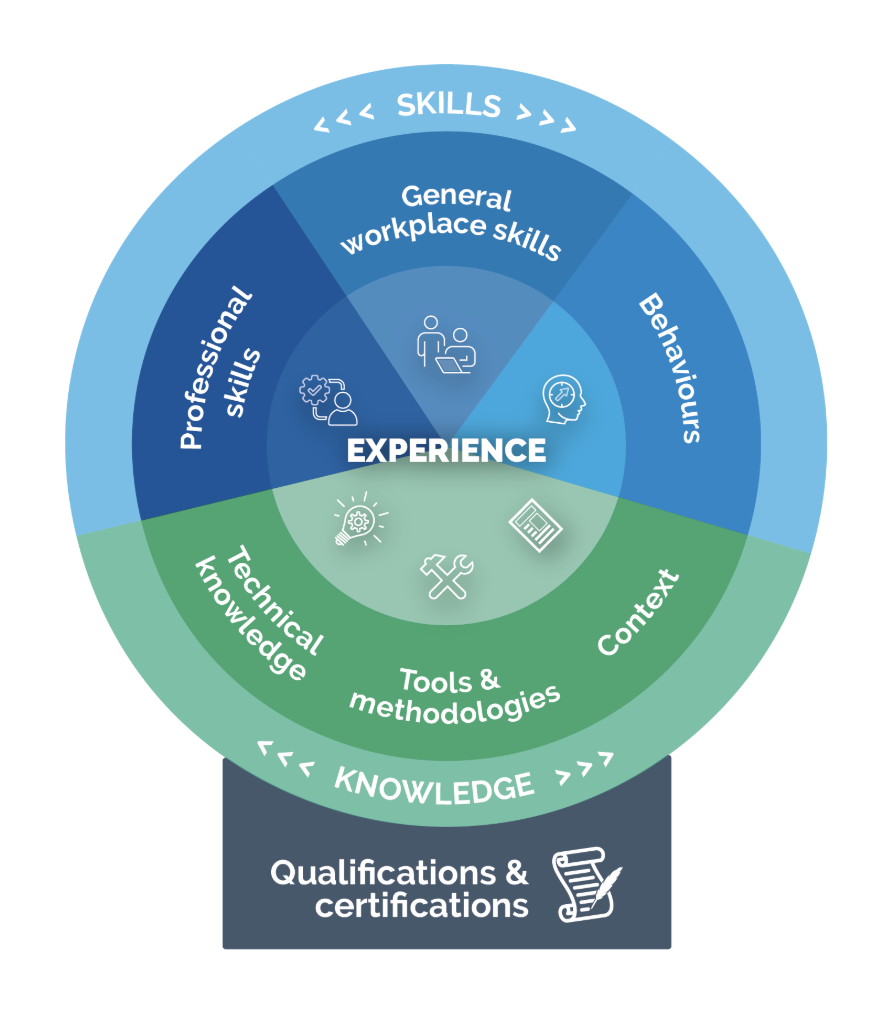
This graphic helps explain the interplay between capabilities, skills, knowledge and dispositions. People still need to have qualifications and experience before they can be considered for a role, especially, professions and trades; however, I wonder if we are getting closer to more companies adopting a, ‘hire for character and teach the skills’ approach to employment.
In conclusion, as the world navigates the transition from a knowledge economy to an innovation economy, and as companies, businesses and organisations increasingly focus of capability frameworks for their employees, it is imperative that schools prioritise the integrate the assessment of complex competencies into their program of teaching. By integrating these competencies into curricula and assessment frameworks, we can ensure that students are not only equipped for the workforce but also empowered to lead and innovate in their future of lives of work and play. The challenge now lies in how effectively schools can implement these changes and measure their impact, ensuring that education remains relevant and responsive to the needs of students in an AI infused and rapidly changing world.
As always, comments and questions are welcome.
Greg
 LEARN AND LEAD